Pretty Patti’s Wrongful Death
The Wrongful Death of Patti Ducharme?
Seeking Truth, Justice, Accountability & Public Safety
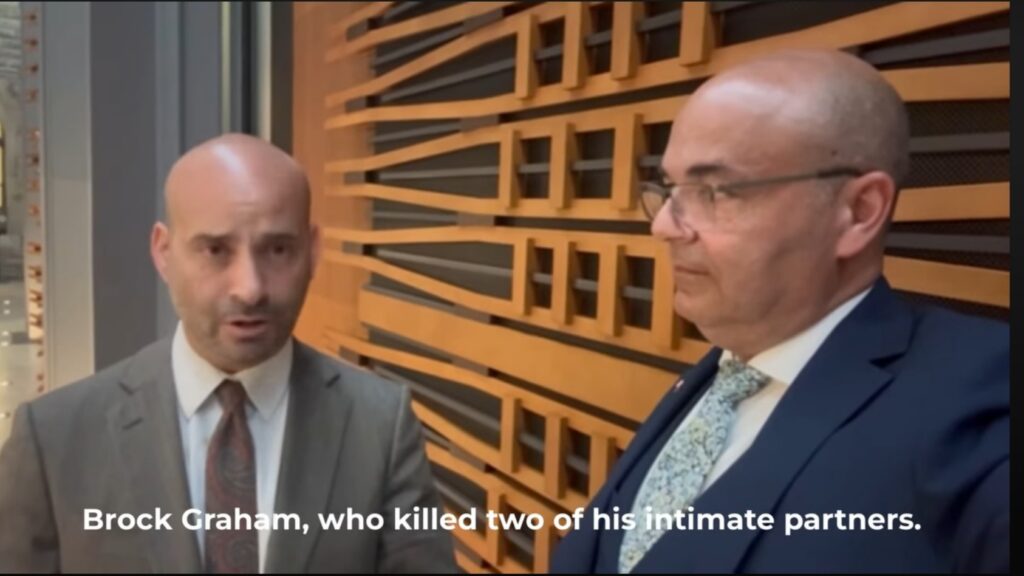
The Ducharme family presents the information on this website in pursuit of truth, transparency, accountability, and answers concerning Patricia Ducharme’s death. References to alleged conduct, police knowledge, surveillance, and investigative decisions are based on sources identified throughout the site and our own documentation and represent matters the family believes warrant further examination. Where facts remain disputed or unconfirmed, they are presented as allegations, reported information, or questions requiring verification.
What Did Police Know When Patricia (Patti) Grace Ducharme Was Killed, and Who Was Supposed to Warn Her?
Our Quest for Government Transparency, Accountability & Public Safety
Request for an Investigation into the Wrongful Death of Patti Ducharme
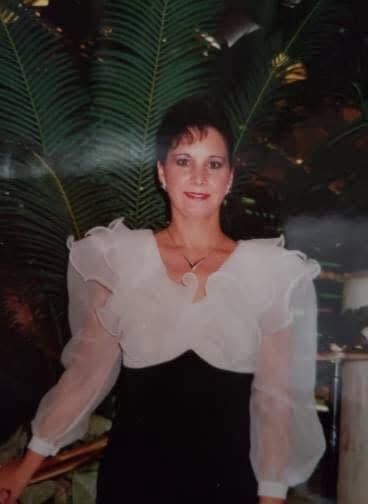
Patricia “Patti” Ducharme, known lovingly to her family and friends as “Pretty Patti,” was a mother of four whose life was tragically taken in March 1996.
According to reported documents, the RCMP was actively surveilling Brock Joseph-William Graham (Graham) while he was living with Patti and her three minor children in our home. Our documented evidence indicates that Graham was under surveillance as a prime suspect of the 1993 murder of Lynn Duggan, and was believed by police to be extremely dangerous and that the same authorities conducting surveillance had not warned Patti about the danger they believed he posed.
The question that has haunted our family for more than 30 years is simple: What did the RCMP know about Graham, when did they know it, and why was Patti—a mother living with three young children—not warned? These are not questions we believe should remain unanswered. They demand transparency, accountability, and a full examination of whether information known to authorities could have prevented Patti’s death.
Our concern is not simply that Graham was under active surveillance—it is that investigators had reason to understand how he responded when he believed he was being watched. According to our documented evidence, Graham was convicted in 1994 of two criminal offences arising from incidents involving surveillance and police: one involving a firearm directed at a Special O surveillance officer who had been following him, and another involving impaired driving after he crashed his vehicle into one driven by an off-duty police officer. These documented incidents raise a critical question: given what authorities already knew about Graham’s conduct and response to surveillance, what steps were taken to protect Patti and her three children when he came under RCMP surveillance again in 1996 in Campbell River?
30 Years of Unanswered Questions
For more than 30 years, our family has asked the federal government for truth, transparency, and accountability. We continue to face unanswered questions about what police knew, what they understood about Graham’s behaviour, what information was available before Patti’s death, and why she was never warned. The absence of answers has compounded our loss and created a second layer of harm through the secondary victimization we have endured.
After three decades, we are calling for a full, independent, and transparent examination of the surveillance, information, and decisions surrounding Patti’s death—including whether opportunities to protect her were missed. We are seeking truth, accountability, justice, and compensation, and asking Canadians to stand with us in demanding that the Government of Canada finally answer these questions.
This is not only about what happened to Patti 30 years ago—it is about preventing another Canadian family from facing the same unanswered questions tomorrow.
The Basic Facts:
- In 1993, Graham, a former Vancouver Police Officer, was the prime suspect in the 1993 disappearance/murder of his intimate partner, Lynn Duggan, in North Vancouver.
- In 1993, Graham was under surveillance for the murder of Lynn Duggan.
- In 1994, Graham was charged with impaired driving after he crashed his car into a vehicle driven by an off-duty police officer, but he was fined only $200 for careless driving.
- In 1995, Graham pleaded guilty to a weapon offence after he was arrested with a gun in a car parked outside the home of an undercover officer in Surrey at about 3 a.m. on Feb. 16, 1994. The officer, a member of the Special O surveillance team, who had earlier been following Graham.
- In December 1995, Graham moved in with Patti Ducharme and her 3 dependent, minor children in Campbell River.
- In January, 1996, Sheila Curran (Patti’s best friend) met with a North Vancouver RCMP Officer to inform the police of Graham’s whereabouts. Sheila was informed that they would have Graham under surveillance and would protect Patti. *See Video Below.
- March 22, 1996 Patti was murdered in her home following an argument about quitting a job with Budget Rentals when he found out there was police surveillance at his workplace as part of the Lynn Duggan investigation.
- Sources quote the RCMP as saying they were surveilling Graham while he was living with Patti, and they did not warn her.
*See Sheila Curran’s statement and my video below:
Dark Poutine: Examining Police Knowledge
Dark Poutine, created and researched by Mike Browne, provides independent reporting and identifies historical sources relevant to the Ducharme family’s negligence theory. The two-part series examines the circumstances surrounding the deaths of Lynn Duggan and Patti Ducharme and provides reporting concerning Brock Graham, the investigation into Lynn Duggan’s death, and Graham’s subsequent relationship with Patti. Dark Poutine identifies the Duggan family files and archives, interviews, newspaper archives, and the court decision in R. v. Graham among its sources.
The Warning That Never Came
The two-part Dark Poutine series provides important independent reporting relevant to the question of what authorities knew about Graham before Patti Ducharme’s murder. Following Lynn Duggan’s 1993 disappearance and suspected murder, Graham—an ex-Vancouver Police officer who had dated Lynn—was identified as the prime suspect in the minds of the Duggan family from the outset. According to Dark Poutine, police eventually came to agree with that suspicion. The series then follows the continuing investigation and Graham’s subsequent move to Campbell River, where he became Patti’s live-in partner in 1995.
Was Patti Warned?
Of particular significance to the Ducharme family is the evidence indicating that Patti did not know Graham was a suspect in Lynn Duggan’s death, and that her children were also unaware of that information. The question of what information was available to police—and whether any of that information was communicated to Patti—is central to the family’s pursuit of answers.
The Critical Question: What Did Police Know?
The issue is not simply whether police could have predicted that Graham would commit another murder. The critical questions are what information authorities possessed, when they possessed it, what investigative or surveillance measures were undertaken, whether authorities knew of Graham’s relationship with Patti, and whether information was communicated between the relevant police jurisdictions.
The Information Gap
The Dark Poutine episodes provide a basis for examining the historical timeline and identifying questions that can be tested against the underlying police and court records: What did police know? When did they know it? What did they do with that information? Did authorities know Graham had entered into a relationship with Patti? And was Patti ever warned about Graham’s status as a suspect in Lynn Duggan’s death?
The Evidence Needed to Establish Negligence
The podcast reporting should be considered alongside the underlying police files, surveillance records, court documents, witness evidence, and other contemporaneous records. If those records establish that authorities knew Graham was a serious suspect in Lynn Duggan’s death, knew of his relationship with Patti, and possessed information that created a foreseeable risk to her safety, those records may be relevant to the Ducharme family’s allegations concerning foreseeability, breach of the applicable standard of care, and the failure to take reasonable steps to protect Patti.
The Newspaper Record: What Was Known at the Time
- Pretty Patti Part 1 – Flipbook (24 Pages)
- Pretty Patti Part 2 – Flipbook (21 Pages)
- Lynn Duggan – Flipbook (10 pages)